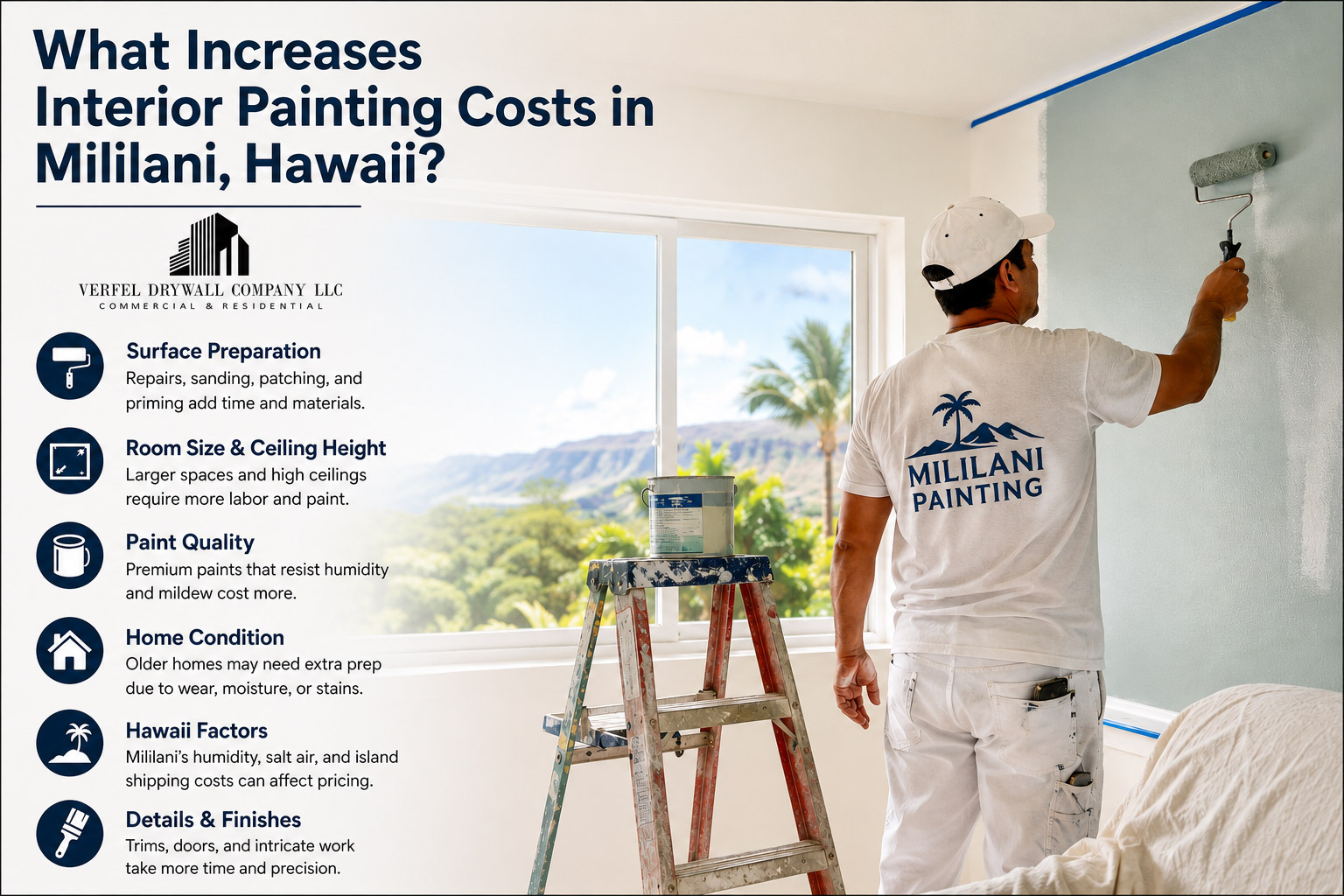
What Increases Interior Painting Costs in Mililani, Hawaii?
Introduction
One homeowner may repaint a bedroom for a relatively modest cost, while another receives a much higher estimate for what seems like a similar interior painting project. The walls may look about the same size, the paint colors may appear similar, and both homes may even be located in the same part of Mililani, Hawaii.
The difference usually comes down to preparation, surface condition, labor complexity, and finish expectations rather than simply the amount of paint being used.
Interior painting involves far more than rolling color onto a wall. Some rooms need extensive drywall repair before painting can begin. Others require stain blocking, detailed trim work, high ceilings, or difficult color transitions that significantly increase labor time. In Hawaii homes, humidity and moisture exposure can also affect surface preparation and paint performance in ways homeowners do not always expect.
Understanding what actually drives interior painting costs helps homeowners compare estimates more realistically and avoid assuming all painting projects follow the same pricing structure.
Surface Preparation Often Determines the Labor Cost
Paint itself is only one part of the project. In many interior painting jobs, preparation work takes longer than the actual painting.
Walls that are smooth, clean, and well-maintained are usually much faster to paint. Surfaces with damage or imperfections require additional labor before any finish coat can be applied properly.
Minor Imperfections vs. Heavy Wall Damage
Small cosmetic flaws are usually manageable with light prep work. However, larger surface issues can expand the project significantly.
For example, contractors in Mililani, Hawaii often encounter:
The smoother and cleaner the final finish needs to look, the more preparation the walls typically require.
Texture Affects Painting Difficulty
Textured walls and ceilings can also increase labor time because they require more careful coverage.
Heavy textures absorb paint differently than smooth drywall surfaces. Some textured finishes need additional coats to achieve even coverage without visible inconsistencies.
Color Changes Can Increase Material and Labor Requirements
Certain paint color transitions require much more work than others.
A homeowner changing from one neutral shade to another may need minimal additional preparation. Moving from dark walls to light paint, however, often requires multiple coats and extra priming.
Dramatic Color Changes Usually Need More Coverage
Paint coverage depends heavily on the existing wall color underneath.
The following transitions commonly increase labor and material usage:
Dark gray to white
Red to beige
Navy blue to light gray
Bold accent walls to neutral colors
Without proper coverage, old colors may continue showing through unevenly after painting.
Some Paint Colors Cover Poorly Naturally
Even premium paint products vary in coverage performance.
Bright whites, deep reds, yellows, and vibrant colors sometimes require extra coats regardless of wall condition. This increases both material use and application time.
Ceiling Height and Room Layout Affect Painting Time
The physical layout of the home changes how efficiently painters can work.
A simple square room with standard-height ceilings is much faster to complete than a room filled with obstacles or architectural detail.
High Ceilings Increase Setup and Labor
Tall walls and vaulted ceilings require additional equipment and slower application work.
Projects involving high ceilings may need:
Ladder systems
Scaffolding
Extended preparation time
More detailed cutting-in work
Additional safety precautions
Even moving equipment throughout the home takes longer when painters must repeatedly adjust for ceiling height changes.
Open Floor Plans Can Create Larger Continuous Surfaces
Many homes in Mililani, Hawaii feature open interior layouts where living rooms, dining areas, and kitchens connect visually.
While open layouts look spacious, they often increase painting complexity because color consistency and blending become more noticeable across larger connected spaces.
Trim, Doors, and Detailed Finishes Require Precision Work
Detailed painting work is usually slower than broad wall coverage.
Baseboards, crown molding, doors, window trim, and built-in features require careful brushwork and edge control that cannot be completed as quickly as rolling large wall areas.
Detailed Surfaces Take Longer Per Square Foot
Trim painting involves more precision because mistakes are easier to notice on smaller surfaces and edges.
Labor often increases when projects include:
Crown molding
Wainscoting
Decorative trim
Interior doors
Built-in shelving
Stair railings
These areas may also require different paint finishes than the walls themselves.
Older Trim May Need Additional Restoration
In some older Mililani homes, trim surfaces may already contain layers of aging paint, chips, or moisture damage.
Before repainting, contractors may need to:
Sand uneven areas
Repair small wood damage
Caulk gaps
Remove peeling finishes
This preparation work adds time long before finish coats are applied.
Occupied Homes Require More Protection and Coordination
Interior painting inside occupied homes is often more labor-intensive than painting empty spaces.
Protecting the homeowner’s belongings becomes part of the project itself.
Furniture and Flooring Need Protection
Before painting begins, crews may need to carefully cover or move:
Preparation and cleanup can become a significant part of the total labor involved.
Daily Household Activity Can Slow the Process
Painting projects sometimes need to work around:
Children
Pets
Remote work schedules
Occupied bedrooms
Active kitchens
This coordination affects workflow efficiency compared to vacant properties.
Moisture and Humidity Can Affect Interior Painting in Mililani
Environmental conditions in Hawaii can influence interior painting performance more than some homeowners realize.
Humidity Affects Drying Conditions
High humidity levels can slow paint curing and drying times.
This sometimes affects:
Recoat timing
Surface consistency
Finish appearance
Moisture sensitivity
In certain rooms, contractors may recommend additional preparation or specialty products to improve long-term durability.
Bathrooms and Kitchens Often Require Specialized Paint
Areas exposed to moisture and heat generally need more durable coatings than standard living spaces.
These rooms may require paints designed for:
Mildew resistance
Washability
Moisture control
Higher humidity tolerance
Specialty coatings usually increase material costs compared to basic interior paint.
Cheap Estimates Sometimes Exclude Important Work
Not all interior painting estimates include the same level of preparation or finishing detail.
A lower estimate may appear attractive initially while excluding steps necessary for a smoother, longer-lasting result.
Areas Commonly Left Out of Budget Estimates
Some lower-cost bids may minimize or exclude:
Extensive wall preparation
Drywall repair
Multiple finish coats
Trim repainting
Stain-blocking primer
Furniture moving
This can create noticeable differences in the final appearance and durability of the project.
The Final Finish Depends Heavily on Preparation
Professional-looking paintwork often depends more on surface preparation than the paint itself.
Even premium paint products tend to highlight imperfections when surfaces are not repaired or leveled properly beforehand.
Frequently Asked Questions About Interior Painting Costs
Why does wall preparation increase painting costs?
Surface repairs, sanding, patching, and priming all require labor time before painting can begin.
Do high ceilings cost more to paint?
Yes. Tall walls and vaulted ceilings require additional setup, equipment, and slower application work.
Why do some paint colors need more coats?
Certain colors naturally provide weaker coverage and may require multiple coats for an even finish.
Does humidity affect interior painting in Mililani, Hawaii?
Humidity can influence drying times, finish quality, and long-term paint durability in certain rooms.
Is trim painting included automatically in every estimate?
Not always. Some estimates separate trim, doors, and detailed finish work from standard wall painting.
Interior Painting Costs Usually Reflect the Work Behind the Finish
Interior painting pricing is rarely determined by square footage alone. Surface preparation, wall condition, room layout, moisture exposure, ceiling height, trim detail, and color transitions all influence how much labor the project actually requires.
In Mililani, Hawaii, humidity and environmental conditions can also affect how surfaces need to be prepared and what products work best long-term. Understanding those factors helps homeowners compare painting estimates more accurately and recognize why some interior painting projects become significantly more involved than others. Companies like Verfel Drywall Company LLC often work with homeowners who need both surface preparation and interior painting solutions to achieve a cleaner, longer-lasting finish throughout the home.
