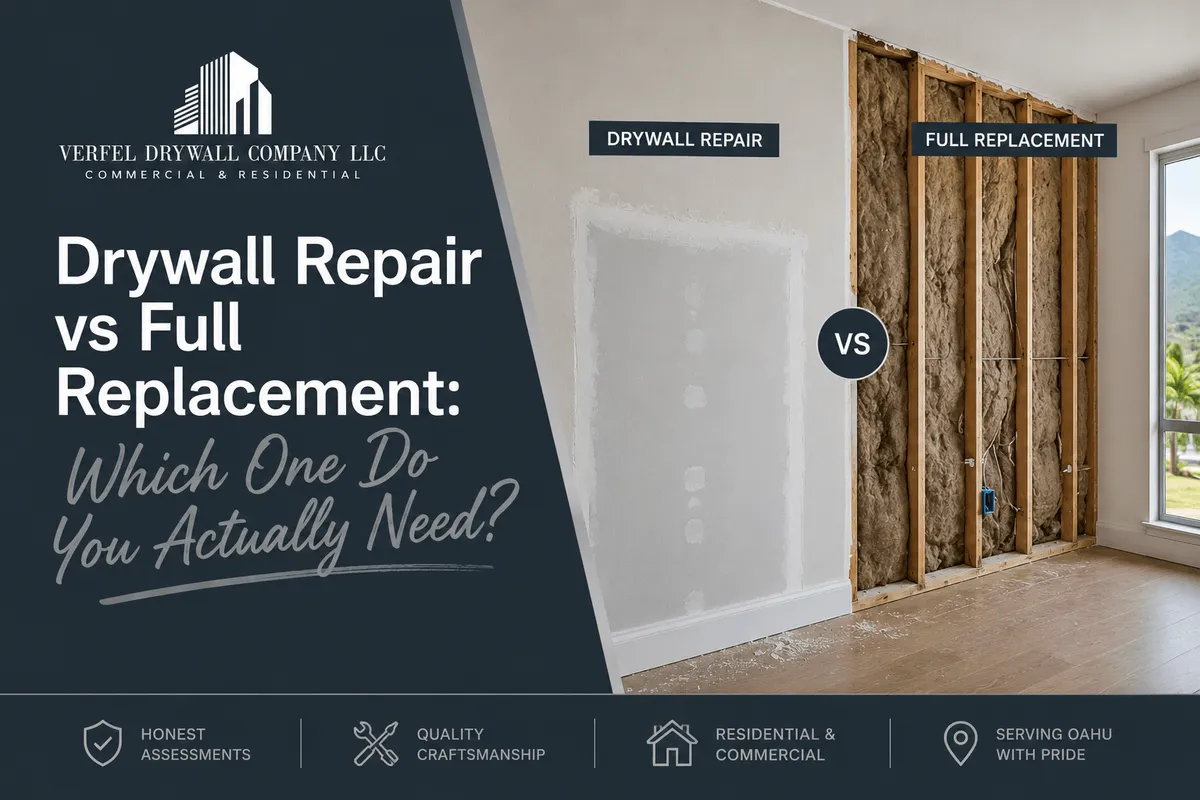
Drywall Repair vs Full Replacement: Which One Do You Actually Need?
Why the Right Answer Is Not Always Obvious
Damaged drywall always raises the same fundamental question: fix what is there or start fresh? It seems like a simple choice, but the right answer depends on factors that are not always obvious at first glance. The size of the damage, the cause behind it, the age of the wall, and the finish you want to achieve all play a role in determining whether repair or replacement makes more sense — both functionally and financially.
This guide walks through the key differences between repair and replacement, the conditions that point toward each option, and how to make the decision with confidence before calling a contractor.
Scenarios Where Repair Is the Right Call
Drywall repair covers everything from filling a nail hole to patching a section several square feet in size. The common thread is that the existing drywall around the damaged area is still structurally sound and can anchor the new material. The following situations are well-suited to repair:
Small holes from nails, anchors, or door handles
Cracks from minor settling or temperature fluctuation
Surface dents or scuffs that do not penetrate the paper facing
Limited water staining with no soft or crumbling material beneath
Patches from access panels or plumbing cutouts
A skilled contractor can produce repair results that are completely undetectable after painting, making full replacement unnecessary from both a functional and aesthetic standpoint. For homeowners in Mililani, Hawaii dealing with typical household damage — a door handle through a wall or minor cracks from seasonal humidity changes — professional repair is almost always the appropriate and cost-effective answer.
Scenarios Where Full Replacement Is Necessary
Full drywall replacement means removing one or more entire sheets and installing new panels. This is the appropriate path when the existing drywall is too compromised to serve as a stable base for repair work. The following situations generally require replacement rather than patching:
Widespread water damage that has softened or crumbled the gypsum core
Mold contamination within the wall cavity or on the drywall surface
Structural damage that requires access to wall framing behind the panels
Multiple overlapping repairs that have left the surface uneven or weak
Insect or pest damage affecting large sections of wall
In Mililani, Hawaii, moisture-related damage is among the most common reasons for full replacement. The island climate creates conditions where small leaks can go undetected for extended periods, and by the time damage is visible on the surface, the drywall beneath may have already degraded significantly.
Repair vs Replacement at a Glance
The following table outlines the key differences between repair and replacement across the factors that matter most when making this decision.
Why Water Damage Complicates the Decision
Water damage is the most common reason the repair-versus-replacement decision becomes complicated. A wall that looks like it needs only a small patch may conceal damage that extends far beyond the visible stain. This is especially true in Hawaii, where high humidity means moisture is rarely contained to a small area.
Before committing to repair, a knowledgeable contractor will probe the surrounding area for soft spots, check moisture readings with a meter, and in some cases recommend opening the wall to inspect the framing. Skipping this step and patching over wet or moldy drywall is one of the most common and costly mistakes in residential drywall work. The patch may look acceptable initially, but the underlying moisture will cause the new compound to fail, mold to grow, and the problem to return worse than before.
Homeowners in Oahu who have dealt with a roof leak, pipe burst, or appliance overflow should always have a professional assess the full extent of the damage before choosing repair as the solution.
How to Decide Before You Call a Contractor
Running through a few quick checks before calling for an estimate will help you describe the damage accurately and set realistic expectations for the conversation. Work through these steps in order to understand what you are likely dealing with:
Press firmly on the damaged area and the surrounding wall. If the surface feels soft, spongy, or crumbles under pressure, replacement is likely necessary.
Look and smell for mold. Discoloration in unusual patterns, a musty odor, or staining at wall bases are signs of hidden moisture damage.
Measure the affected area. Damage covering more than roughly 25 to 30 percent of a wall surface often makes replacement more cost-effective than extensive patching.
Confirm the source of damage has been fixed. No repair or replacement should be started over an active leak or unresolved moisture source.
Note the existing texture type. If the texture is popcorn or a highly custom finish, factor in whether a seamless match is realistically achievable in your space.
Frequently Asked Questions
Can drywall be repaired if it has been wet but is now dry?
It depends. If the drywall dried quickly and completely without developing mold or significant softening, repair may be feasible. However, drywall that was saturated for more than 24 to 48 hours often loses structural integrity even after drying, and replacement is the safer choice. A contractor can assess this with a moisture meter and physical inspection.
How do contractors match existing texture when doing a patch repair?
An experienced contractor will identify the texture type — knockdown, orange peel, smooth, or other — and replicate the original application method. This may involve spray equipment, a specialized roller, or hand application. The patch is then primed and painted to match the surrounding surface.
Is there a size at which repair stops making sense?
There is no universal rule, but many contractors consider repairs covering more than 25 to 30 percent of a wall comparable in effort and cost to full replacement. At that scale, replacement often delivers a better, more consistent result for a similar investment.
Does replacing drywall require a building permit in Hawaii?
Replacing drywall as part of a repair typically does not require its own permit in Hawaii. However, if the work involves structural modifications, electrical, or plumbing — which may be exposed during full replacement — permits may apply. A licensed contractor will be familiar with local requirements in Oahu.
How can I tell if my drywall has hidden mold before a contractor arrives?
Musty odors, discoloration at the base of walls, bubbling paint, and soft spots under pressure are common indicators of mold or moisture damage behind the surface. If you notice any of these signs, they should prompt a professional inspection rather than a DIY repair attempt.
Conclusion
The choice between drywall repair and full replacement is not about preference — it is about what the wall actually needs based on the extent and cause of the damage. Repair is cost-effective and produces excellent results when the conditions support it. Replacement is the right investment when the underlying material has been compromised beyond what a patch can address.
Verfel Drywall Company LLC has helped homeowners across Mililani, Hawaii and throughout Oahu make this call correctly for over 30 years. The team assesses every situation carefully before recommending a path forward, because doing the job right the first time is always less expensive than doing it twice. Call (808) 630-0966 for a free estimate.
